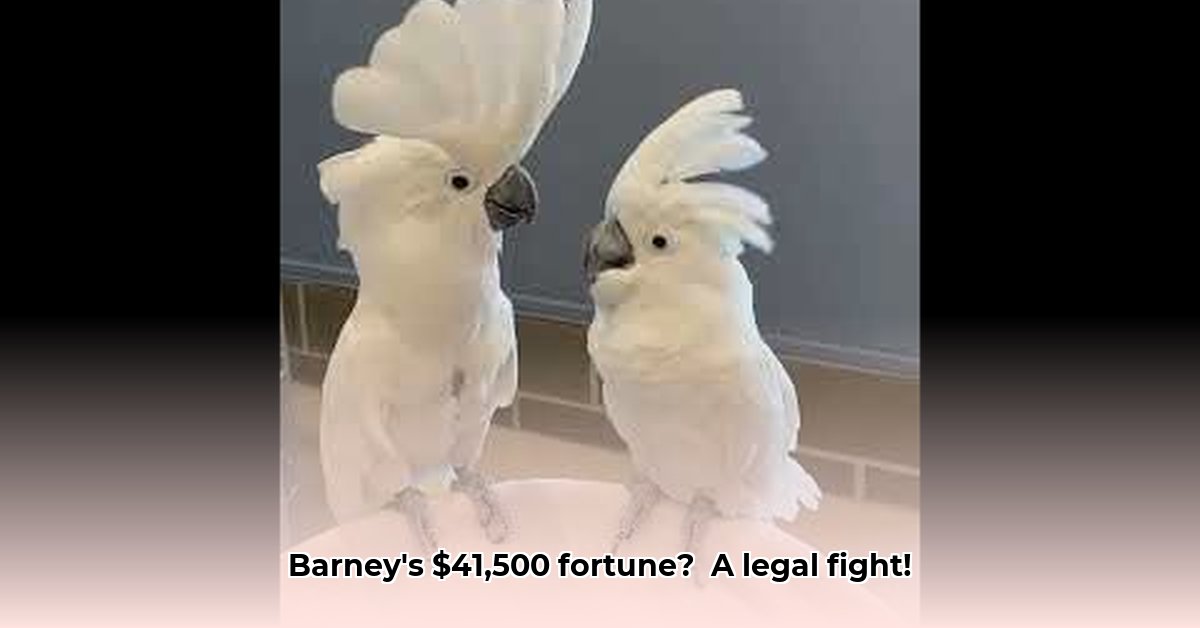
Barney the West Coast Cockatoo: A Feathered Frenzy in the Courtroom
Barney, a West Coast Cockatoo, has become an unlikely internet sensation, amassing an estimated net worth of $41,500 from his popular YouTube channel. This financial success, however, has sparked a contentious legal battle over his ownership and raises significant ethical questions regarding profiting from an animal's online fame. The dispute highlights the lack of clear legal frameworks governing exotic pet ownership and the potential for exploitation in the digital age.
A Bird's-Eye View of the Controversy
Barney's YouTube channel features engaging videos showcasing his intelligence and mimicry skills. This online popularity translates to substantial income from advertisements and potential sponsorships, estimated at approximately $41,500 annually. This unexpected wealth, however, has ignited a fierce legal dispute, pitting various parties against each other in a fight over custody and control of Barney’s substantial earnings. The legal ambiguity surrounding exotic pet ownership, coupled with the lack of clear guidelines regarding the commercial use of animals, fuels this complex controversy. The core question remains: Who legitimately owns Barney, and how should his considerable earnings be managed, prioritizing his welfare?
Untangling Barney's Nest Egg: The Financial Landscape
Precise figures regarding Barney's income remain elusive. While the $41,500 estimate reflects a reasonable approximation based on YouTube analytics and potential merchandise sales, the actual amount could fluctuate considerably. His income stream likely includes YouTube ad revenue, potential merchandise sales linked to his online persona, and possible endorsements from various brands. This financial uncertainty further complicates the legal battle, intensifying the struggle over who assumes responsibility for his care and management of his earnings.
Ethical Considerations: Profiting from a Parrot's Popularity
The ethical considerations surrounding profiting from Barney's online fame are undeniable. Many argue that commercializing an animal, regardless of its popularity, is inherently problematic. Critics raise concerns about exploitation, emphasizing the potential for compromising Barney's well-being for financial gain. This concern is particularly pertinent given the potential endangerment of his species. The central ethical question becomes, "What responsibilities do we bear when we leverage an animal's fame for economic advantages?" What safeguards should be implemented to ensure the animal's welfare is prioritized? Does the potential profit outweigh the inherent risks associated with such exploitation?
The Legal Battle: A Fight for Custody and Control
The legal battle surrounding Barney's ownership is complex, involving multiple parties with competing claims. Determining the rightful owner requires navigating a convoluted legal landscape, further complicated by the lack of transparency regarding Barney's financial affairs. The absence of easily accessible financial records further obfuscates the legal proceedings. The lack of established legal precedents for similar cases adds another layer of difficulty in resolving this dispute. At the heart of this legal battle is a living being, whose well-being should be paramount.
Conservation Concerns: A Broader Perspective
Barney's case transcends the individual and assumes broader significance within the context of West Coast Cockatoo conservation. The legal fight underscores the need for tighter regulations within the exotic pet trade and highlights the potential for exploitation of endangered species. What mechanisms can be implemented to effectively prevent such exploitation? In essence, how do we balance the needs of an individual animal with the overarching goal of species preservation? The answers to these questions hold far-reaching implications for wildlife conservation.
Looking Ahead: Seeking a Resolution
The outcome of this legal battle will set a crucial precedent, guiding future cases involving exotic animals and commercial exploitation. The resolution will likely influence legislative changes and policy adjustments concerning animal welfare and pet ownership. Finding a just resolution demands a balanced approach, reconciling the legal complexities with the inherent ethical considerations. The ideal outcome would prioritize Barney's well-being while addressing broader concerns about responsible wildlife ownership. A successful resolution requires navigating a complex terrain of legal frameworks, ethical considerations, and the genuine welfare of the animal at the center of the conflict.
Assessing the Risks Facing Barney
| Risk Factor | Probability | Severity | Mitigation Strategy |
|---|---|---|---|
| Protracted Legal Battles | High | High | Expedited legal proceedings, clear documentation of care. |
| Compromised Animal Welfare | Medium | High | Independent welfare checks, transparent public reporting. |
| Negative Publicity | Medium | Medium | Proactive public relations, ethical financial transparency. |
| Misuse of Barney's Image | Medium | Medium | Strict guidelines on commercial use of his image. |
Key Takeaways:
- Barney’s case highlights the ethical dilemmas inherent in profiting from an animal’s online popularity.
- The current legal framework governing exotic pet ownership is inadequate, leading to disputes and potential animal welfare concerns.
- A successful resolution requires a holistic approach, addressing legal ambiguities, ethical considerations, and Barney’s well-being.
The outcome of Barney's legal battle will have significant ramifications for future cases involving online animal celebrities and the broader issue of responsible exotic pet ownership. His story serves as a cautionary tale, demanding renewed attention to the ethical and legal complexities of the intersection between animal welfare and the digital world.